
Patrick Spins Casino on a handset — slot reels, streamed dealer rooms, the integrated sportsbook, plus the cashier widget, all reachable through Safari or Chrome without committing to any executable download.
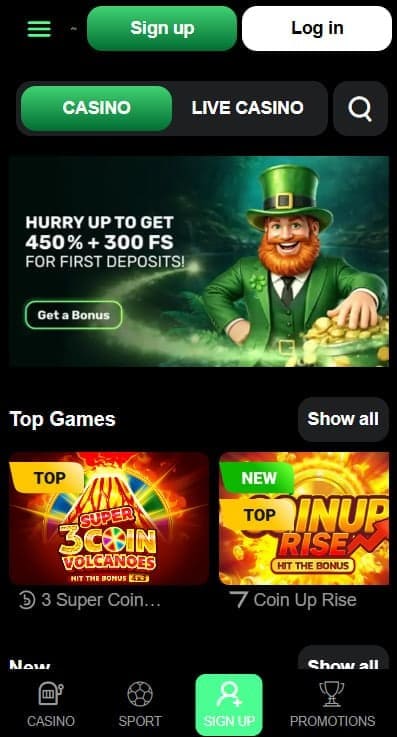
Handset access at this brand splits across two delivery channels rather than the single browser-first arrangement common across the offshore segment. A responsive HTML5 layout loads cleanly inside Safari, Chrome, Edge, or any modern mobile engine — the standard route most British readers will take. Alongside that sits a dedicated Android APK distributed directly from the operator's own surfaces rather than through Google Play (the marketplace does not list real-money gambling installers inside the UK market). No native iOS binary exists through any channel, which reflects Apple's parallel restriction on casino apps targeting British audiences rather than a deliberate omission by the operator itself. We loaded the lobby across three test devices during this review — a recent iPhone running Safari, a Pixel handset on Chrome, plus an older Android device still on a legacy browser engine — and the experience scaled cleanly across all three with no functional gaps versus a desktop session.
What follows below walks through the practical workflow on a phone: opening the lobby through Safari or Chrome, adding a home-screen shortcut for one-tap re-entry, the off-store APK route with its attached security considerations, how streamed-table content behaves on a small screen, performance under weak signal, plus the cashier and identity-verification flows on a handheld device. Every observation reflects browser-based and APK-based testing across UK-region carriers during our editorial window.
| Access Path | How It Works in Practice | Best Suited For |
|---|---|---|
| 🌐 Direct Browser Session | Open Safari, Chrome, Firefox, or any Chromium-based alternative plus navigate to the operator URL — no installation runs on the device, nothing persistent attaches beyond standard cookie storage | Casual visitors, anyone keeping device storage untouched, readers wary of off-store binaries |
| 🏠 Home-Screen Shortcut | Bookmark added through the share menu or browser options · launches the lobby inside a dedicated tab with one tap from the device grid | Regular players preferring fast re-entry without committing to a full APK installation routine |
| 📲 Off-Store Android APK | Installer downloads directly from the operator's surfaces — sideload routine requires temporarily enabling "Install unknown apps" inside Android security settings before the file will execute | Android users specifically wanting standalone-app behaviour, accepting the sideload security exposure attached to any off-marketplace gambling binary |
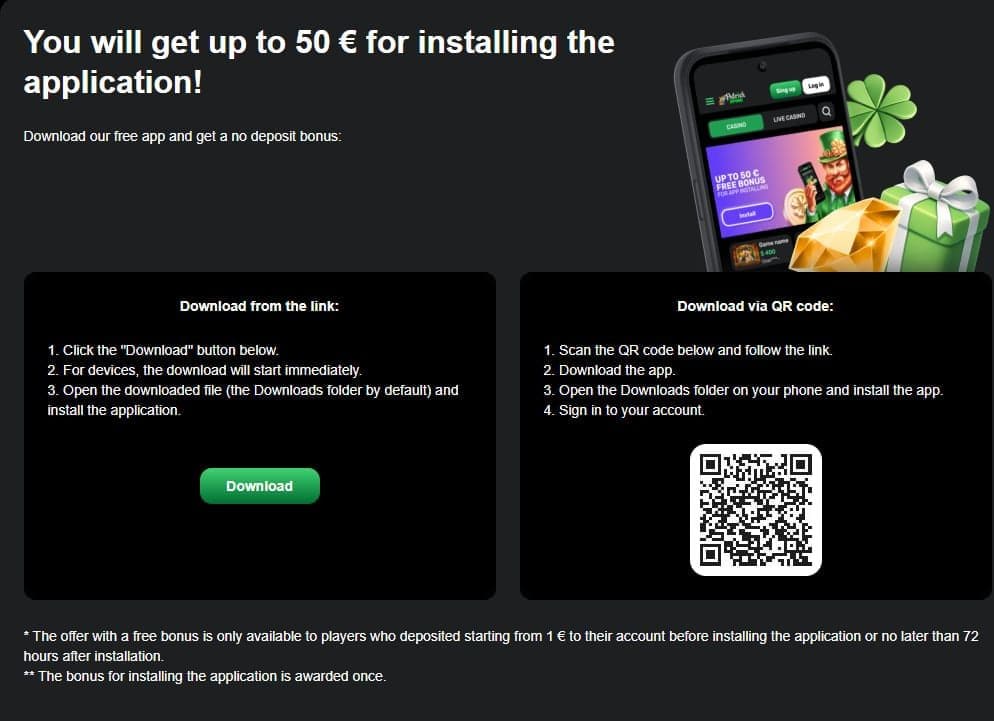
Worth flagging up front: the operator's own pages encourage the APK route by featuring a QR code on the homepage that points to the installer file. Sideloading any gambling binary from outside Google Play involves a security-trade-off that deserves consideration rather than reflexive acceptance. Third-party Android installers across the offshore market have an extensively documented history of harbouring tampered builds — keyloggers, credential harvesters, modified clients designed to redirect deposit traffic to attacker-controlled wallets. The risk does not specifically attach to this operator's binary, which may well be exactly what the surface claims; the structural exposure attaches to the practice of sideloading itself. For most British readers, a home-screen shortcut delivers identical lobby behaviour without granting "unknown sources" permissions on the device.
This delivers near-app behaviour without invoking any installation routine. Opening the icon takes you straight into the gaming area. Session-cookie persistence holds across closures, identity-document uploads via the device camera work without additional setup, and streamed-room audio routes correctly through standard mobile output channels. The browser address bar remains visible at the top of the window — the single noticeable visual difference compared with a true standalone application.
This route avoids the "unknown sources" security toggle that the off-store APK installer would otherwise require. Compared with sideloading an actual binary, the shortcut path nothing genuinely installs outside Chrome's own sandbox. For the overwhelming majority of British readers, the trade-off between PWA-style polish and the security-exposure attached to off-marketplace executable files weighs heavily toward the shortcut path rather than the APK alternative.
The operator's primary surface promotes a dedicated Android client distributed outside Google Play, with a QR code on the homepage pointing to the installer file. The published process runs across five steps: visit the website on an Android device, tap the installer link (or scan the QR code), enable downloads from unknown sources inside the device's security settings, run the downloaded file, then sign into the freshly-installed client. We worked through this sequence on a test handset during the review, and the installation completed without obvious incident.
Two structural concerns deserve direct surface before any reader follows the same path. First, sideloading requires the same security toggle that legitimate APK files use alongside the malware variants designed to look identical at the moment of download — Android's security model cannot distinguish between them once the permission is granted, and the toggle stays open across subsequent installations unless explicitly reverted. Second, the operator publishes neither a SHA-256 checksum nor a signing certificate fingerprint that would let a reasonably technical user verify the integrity of the file they actually received against what the brand intended to distribute. We are not alleging anything specific about the binary on offer at the time of our review; we are noting that the assurance layer most British readers would expect on a financial application simply does not attach to off-store gambling installers in general.
The functional argument for using the APK over the browser route is thinner than the marketing suggests. Both deliver access to the full catalogue, the same cashier, the same identity-verification flow, the same chat widget. What the standalone client adds is a launcher icon plus the cosmetic absence of the browser address bar — same outcome the home-screen shortcut achieves without any sideload exposure on the device.
Live-dealer presentation rearranges itself between portrait and landscape orientations. Holding the device vertically stacks the dealer video above the betting controls; rotating to landscape splits the screen side-by-side, with the stream occupying the larger portion and controls compressing into a vertical strip along one edge. Most game-show formats default toward landscape because their interface assumes the wider viewport. Roulette and blackjack work cleanly in either orientation.
Stream quality holds steady on a reliable 5G connection or solid Wi-Fi link. Drop to 4G with congested signal and the video downgrades automatically — resolution drops first, then frame rate, before the audio cuts in extreme cases. Patchy connections handle slot reels far better than streamed rooms because RNG outcomes resolve server-side regardless of whether the device stayed connected throughout a round.
Deposit flows on mobile match the desktop experience step-for-step. Selecting Visa or Mastercard triggers the standard card-entry form with appropriate keyboard-type prompts (numeric keyboard for the card number, alphanumeric for the cardholder name). The cryptocurrency rails generate a deposit address with an attached QR code — scanning that code from a separate wallet application on the same device requires switching out of the casino into the wallet app, which can interrupt the flow if you are using a single handset for both. We recommend completing crypto deposits from a desktop wallet where possible, or using two devices in tandem (one displaying the address, one initiating the send) where that fits your setup.
Identity-document upload during the verification step uses either the device's camera directly or files already saved to the photo library. Capturing the photograph at the upload moment usually yields cleaner submissions than transferring scans from a laptop because lighting and orientation prove easier to manage with a handheld device pointed straight at the document.
Pure slot sessions sit light on bandwidth — figure roughly 50 to 100 MB per hour of active reels play, well inside virtually every monthly data allowance currently offered to British mobile customers. Streamed-table activity changes the picture meaningfully: bandwidth consumption climbs to between 500 MB and 1 GB per hour at standard HD resolution. Readers operating on capped allowances should monitor cumulative usage carefully or restrict live-floor play to Wi-Fi connections where practical.
Battery drain runs higher on streamed content than on slots because the screen stays brighter for longer and the device decodes incoming video continuously. Reels-focused sessions can extend across hours on a recent phone without obvious power impact; live tables push battery usage closer to what gaming applications consume. Bluetooth headphone connections work reliably for audio output during slot sessions; streamed dealer voiceover shows occasional latency drift when paired through wireless audio, which switching to wired earphones eliminates completely if the lag becomes distracting.
Password recovery runs through an email-based reset path. Tapping "Forgot password" triggers a message sent to the address on file. We strongly recommend storing credentials inside a reputable password manager — Bitwarden, 1Password, iCloud Keychain, or any well-reviewed equivalent — rather than relying on memory or browser autofill. Gambling-account login data sits among the higher-value targets across the phishing-campaign ecosystem, and a manager-stored credential combined with two-factor authentication where the operator offers it materially raises the attacker's cost of compromise.
Browser-first delivery works competently here. Functional parity against a desktop session sits at effectively complete — every feature reachable through a laptop turns up on a handset, including cashier flows, identity-document submission, streamed-floor access, promotional opt-in mechanics, plus the limited self-service responsible-gambling toolkit the operator has chosen to surface. Absence of a native iOS binary costs a small amount of polish on iPhone (slightly more vertical space lost to browser interface, no push notifications reaching the device, occasional keyboard-overlap quirks during cashier entry) but nothing structural disappears.
For British readers familiar with UKGC-licensed mobile experiences, the handset offering here will feel less refined around the edges. Streamlined onboarding flows, integrated GamStop hooks at registration, polished native-app feel — none of these apply on a browser-and-sideload-only delivery. What does carry across identically is the underlying gameplay layer, because the studios shipping the games (Playtech, Evolution, NetEnt, BGaming, and the rest of the supplier mix) push the same HTML5 builds across every venue licensing their catalogues. Differences sit in the wrapper around the games, and that wrapper here is functional rather than premium.
Our specific recommendation: avoid the APK route unless you have a clear technical reason to prefer it, install a home-screen shortcut for one-tap re-entry, plus disable the "unknown sources" toggle if you do choose to sideload the binary at any point. The marginal polish that the standalone client adds over the browser experience does not justify the security exposure attached to off-store gambling installers more broadly.
An Android APK installer distributes directly from the operator's own surfaces — Google Play does not list real-money casino binaries across the British market, so off-store delivery is the standard offshore-segment response. No iOS application exists through any channel because Apple's App Store applies the same regional restriction on gambling content. iPhone users route exclusively through Safari into the responsive web layout, which delivers full feature parity with the desktop experience.
We cannot independently verify the integrity of any binary distributed outside official app marketplaces, even where the file presents itself as coming directly from a brand-connected source. The operator publishes neither a SHA-256 checksum nor a signing-certificate fingerprint that would allow a reasonably technical user to confirm what they downloaded matches what was intended to distribute. Our recommendation: use the home-screen shortcut path via Chrome instead — same lobby behaviour, no sideload permissions granted on the device, no security exposure attached to off-marketplace gambling executables.
Where Chrome detects PWA-compatible markers in the page metadata, an "Install" option may surface alongside the standard "Add to Home Screen" choice. Behaviour varies between browser versions plus across handset OS releases, so the more reliable path for most readers remains the regular shortcut option, which delivers the majority of the same benefit without depending on PWA detection specifically.
Yes — slot reels, streamed dealer rooms, the crash-game segment, table classics, jackpot progressives, bingo titles, plus the integrated sportsbook all render through the responsive layout. Live presentations show layout differences against desktop (stream above controls in portrait rather than side-by-side), but functional access stays complete across every category in the lobby.
Roughly 500 MB to 1 GB per hour at standard HD resolution. Slot-only sessions consume far less at 50 to 100 MB hourly. Anyone operating on capped mobile data should restrict live-dealer access to Wi-Fi connections where practical, particularly across longer sessions.
Yes — the responsive cashier triggers the device camera or photo library when KYC submission becomes required. Capturing the image at the upload moment usually yields cleaner results than transferring scans from a laptop, because lighting and document orientation prove easier to manage with a handheld device pointed straight at the page.
RNG outcomes resolve server-side, so the round completes regardless of whether your device stayed connected throughout. Reopening the lobby after signal recovery restores the session and credits any winnings to the balance. Streamed rounds resolve against the dealer's actual table outcome — you receive whatever the round delivered, positive or negative, once the connection returns.
Yes — the promotional architecture applies identically regardless of how the account accesses the lobby. Welcome activation, the ongoing campaign rotation, plus the no-deposit options (€5 cash credit or 50 free spins, plus the separate 50-spin reward for linking the brand's Telegram bot) all operate the same on handset as on laptop. The five-cap stake during welcome rollover applies across both surfaces.
It doesn't change anything technical about the mobile experience — the responsive layout and the APK installer work the same regardless of which framework supervises the venue. What the licensing reality does affect is the consumer-protection envelope around your activity. With no UKGC integration and no GamStop check at registration, the responsibility for managing your own play sits more firmly on your own shoulders than at a Commission-supervised venue. Anyone working through an active national self-exclusion should not attempt access from any device — and calling GamCare on 0808 8020 133 first is the right move if the impulse to test the gap feels urgent.
Two-factor support did not surface inside the documentation we examined during our review. Basic password protection is the default and apparently only authentication layer the brand currently offers. Combined with the financial value of an active gambling balance, that gap argues for using a unique high-entropy password stored inside a password manager rather than re-using credentials across other accounts — credential-stuffing attacks specifically target gambling platforms because the conversion path from compromised login to extracted value is unusually direct.